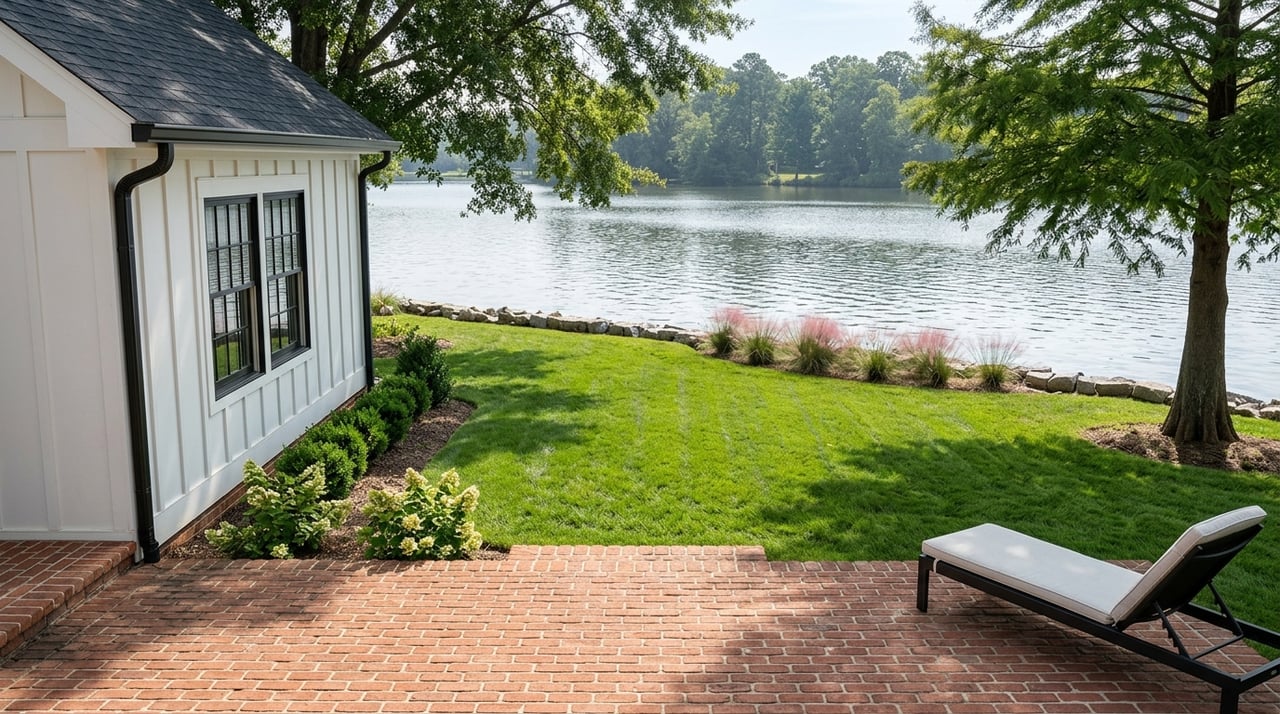
Dreaming about life near Lake Norman? The view can be the easy part. The harder part is knowing what “near the water” really means in Charlotte, how lake access works day to day, and what rules or maintenance needs come with it. If you want to buy with fewer surprises and more confidence, this guide will help you look beyond the listing photos and focus on what matters most. Let’s dive in.
What “near the water” means
In the Lake Norman area, “near the water” can describe several very different ownership setups. Lake Norman is a 34-mile-long reservoir with about 520 miles of shoreline, and Huntersville is one of its core towns with a major public access point at Blythe Landing.
That means one listing may offer true waterfront ownership, while another may offer deeded lake access, marina proximity, or simple convenience to a public launch. If you are comparing homes, it is important to verify exactly what kind of access comes with the property instead of relying on marketing language alone.
Why Huntersville draws buyers
Huntersville gives you a Lake Norman lifestyle with practical access points and everyday convenience. Mecklenburg County’s Blythe Landing is a major local asset, with six boat ramps, 218 trailer spaces, and a sailing center that offers classes and memberships for sailing, kayaking, and paddleboarding.
For many buyers, that creates a strong middle ground. You may not need direct shoreline ownership to enjoy the lake regularly, especially if your real priority is getting on the water easily and often.
Visit at busy and quiet times
Lake Norman has a strong seasonal rhythm. Visitor coverage for the area shows that summer weekends and holidays can feel much busier than an ordinary weekday.
That matters when you are choosing a home near marinas, launches, bridges, or popular waterfront destinations. A street or cove that feels peaceful during a weekday showing may feel very different on Memorial Day weekend or during peak boating season.
If possible, visit the same area more than once. Seeing it during both slower and busier times can give you a much clearer picture of traffic, noise, parking, and overall pace.
Compare your access options
The best lake-adjacent home for you depends on how you plan to use the water. Some buyers want the convenience of stepping into the backyard and heading to a dock, while others are perfectly happy with public launch access or marina services.
Before you fall in love with a property, think about how often you plan to boat, paddle, entertain guests, or store equipment. The right answer is not always the closest house to the shoreline.
Waterfront ownership
A true waterfront property can offer direct shoreline access and the strongest day-to-day lake connection. It can also come with more responsibility, especially when it comes to shoreline upkeep, permits, erosion concerns, and dock-related questions.
If you are considering lakefront, treat it as both a home purchase and a regulated shoreline asset. That mindset can help you ask better questions early.
Deeded lake access
Some homes include deeded access to the lake without being directly on the water. This can be a practical option if you want a lake lifestyle without taking on all the responsibilities of shoreline ownership.
Still, you should confirm what that access actually includes. Recorded deeds and plats matter more than assumptions or listing descriptions.
Marina-adjacent living
Lake Norman visitor resources note that marinas around the lake may offer launches, slips, storage, rentals, repairs, and fuel stops. For some buyers, being near a marina is the simplest path to enjoying the lake.
This option can work especially well if you want boating access without managing private shoreline improvements. The tradeoff is that your lake use may depend more on marina fees, availability, and operating rules.
Public launch convenience
Huntersville’s Blythe Landing gives many buyers a strong public-access option. If your goal is regular lake use without waterfront pricing or shoreline maintenance, being close to a launch may be enough.
The key question is not just distance. It is whether the access works for your routine, your boat, and your preferred times on the water.
Boating rules affect daily life
If you plan to spend time on the water, local boating rules should be part of your home search. In North Carolina, operators born on or after January 1, 1988 must complete an approved boating education course before operating a motorized vessel of 10 horsepower or more.
NC Wildlife also says children younger than 13 must wear an approved life jacket while underway. These are not small details when you are planning family outings, hosting guests, or teaching someone new to the lake.
The Lake Norman Marine Commission also notes no-wake restrictions near bridges, docks, piers, launches, water intakes, and similar structures. In practice, that can affect your route, timing, and how convenient a specific location feels for everyday boating.
Congestion and bridge clearance matter
The Marine Commission notes that bridges, marinas, gas docks, yacht clubs, and lakeside restaurants can be congested. It also warns that bridge clearances and hazards depend on lake level and wave conditions.
If you own a larger boat or expect visiting friends and family to use the lake, this can matter more than buyers first realize. A property may look ideal on a map, but the actual route in and out can be less simple during busy times or lower-water periods.
Water levels can change your experience
Lake access is not static. Mecklenburg County has posted low-water ramp closures at Lake Norman, which is a strong reminder that a launch or cove may not function the same way year-round.
The Lake Norman Marine Commission says water levels on the lake can vary by as much as 8 feet in normal operation, and the lake is generally drawn down in the fall and winter. That seasonal change can expose rocks, stumps, sandbars, and other hazards.
What looks like an easy shoreline during a spring showing may feel very different a few months later. If a home’s value to you depends on boating access, confirm how the lot, cove, dock area, or nearby launch performs during lower-water periods.
Verify documents before you commit
For lake-adjacent purchases, paperwork matters just as much as location. North Carolina requires sellers to provide a residential property disclosure statement and, when applicable, an owners’ association and mandatory covenants disclosure statement.
Those forms address issues such as water supply, sanitary sewage disposal, restrictive covenants, dues, special assessments, pending lawsuits, and transfer fees. The North Carolina Real Estate Commission also makes clear that the due diligence period is your chance to gather information and inspect the property, and that the disclosure statement is not a guarantee of condition.
Use county records and GIS tools
Mecklenburg County offers useful tools for lake-area buyers. POLARIS includes zoning overlays, floodplain overlays, and other regulated restrictions, while the Register of Deeds holds recorded deeds, mortgages, maps, and plats.
These records can help you verify access rights, easements, covenants, and boundary lines. That is especially important when a home is advertised as having lake access, community amenities, or shoreline features.
Confirm shoreline permits
If the property has a dock, pier, or planned shoreline work, Duke Energy should be part of your research. Duke says buyers should contact Lake Services before changing piers, docks, shoreline property, dredging, or shoreline stabilization.
Its shoreline permit guidance notes that work may require a survey, plan and profile drawings, county or local building permits, and state shoreline-stabilization permits. In short, not every improvement is simple, automatic, or fast.
Ask these questions before making an offer
A beautiful lake-area home can still come with surprises. These are some of the most important questions to answer early:
- Is the property true waterfront, deeded lake access, or simply close to the lake?
- Do the deed and recorded plat confirm the access being advertised?
- Is there an existing dock or shoreline permit, and can it be transferred?
- What HOA dues, transfer fees, special assessments, or pending lawsuits apply?
- Is the home on public water and sewer, or does it use septic or a private or shared well?
- Are there floodplain, drainage, or erosion concerns affecting the lot or shoreline?
- Does the preferred launch, marina, or cove still work during low-water periods?
When you answer these questions before you write an offer, you protect both your budget and your expectations.
Think beyond the view
Buying near Lake Norman is often about lifestyle, but daily ownership comes down to practical details. Access, maintenance, regulation, and seasonal changes all shape how the property will live over time.
Shoreline erosion is one example. Mecklenburg County’s Urban Cost Share Program includes assistance for streambank stabilization and riparian buffers in Huntersville and nearby lake towns, which shows that erosion control is a real local concern.
Check flood risk early
Flood planning should happen before closing. FEMA says flood maps help determine flood-risk zones, insurance requirements, and building-code implications.
If a home is in a high-risk zone and the mortgage is government-backed, flood insurance is required. Even when a property is outside a high-risk zone, checking the map still matters because every zone carries some flood risk.
For buyers near the water, this is one of the easiest steps to overlook and one of the most important to address early.
Why local guidance matters
Lake Norman ownership can involve several layers of rules and oversight. Duke Energy, NC Wildlife, the Lake Norman Marine Commission, Mecklenburg County, and an HOA may all affect what you can do and how the property functions day to day.
That is why buying near the water is not just about finding the prettiest lot. It is about matching your goals with the right type of access, the right level of upkeep, and the right expectations for life on and near the lake.
If you are exploring Lake Norman or Huntersville and want a clearer plan for what to look for, the team at The Sears Group can help you evaluate access, documents, and day-to-day fit so you can move forward with confidence.
FAQs
What does “near the water” mean in Lake Norman real estate?
- In Lake Norman, “near the water” may mean true waterfront, deeded lake access, marina-adjacent living, or simply proximity to a public launch like Blythe Landing in Huntersville.
What should you verify before buying a waterfront home in Huntersville?
- You should verify the deed and recorded plat, any dock or shoreline permits, HOA rules and fees, water and sewer setup, and any floodplain, drainage, or erosion concerns.
Do Lake Norman water levels affect property use?
- Yes. Lake Norman water levels can vary by as much as 8 feet in normal operation, and fall and winter drawdowns can expose hazards and change how shorelines, docks, coves, and launches function.
Are there boating rules that matter when buying near Lake Norman?
- Yes. North Carolina boating rules include education requirements for some motorized vessel operators, life jacket rules for children younger than 13 while underway, and local no-wake restrictions near certain structures.
Is buying near a marina or public launch a good alternative to waterfront ownership?
- For many buyers, yes. Marina access or proximity to a public launch can provide an easier and lower-maintenance way to enjoy the lake without direct shoreline ownership.
Why is due diligence so important for Lake Norman homebuyers?
- Due diligence gives you time to inspect the property, review disclosures, confirm access rights, check permits and county records, and understand how the home will function before closing.