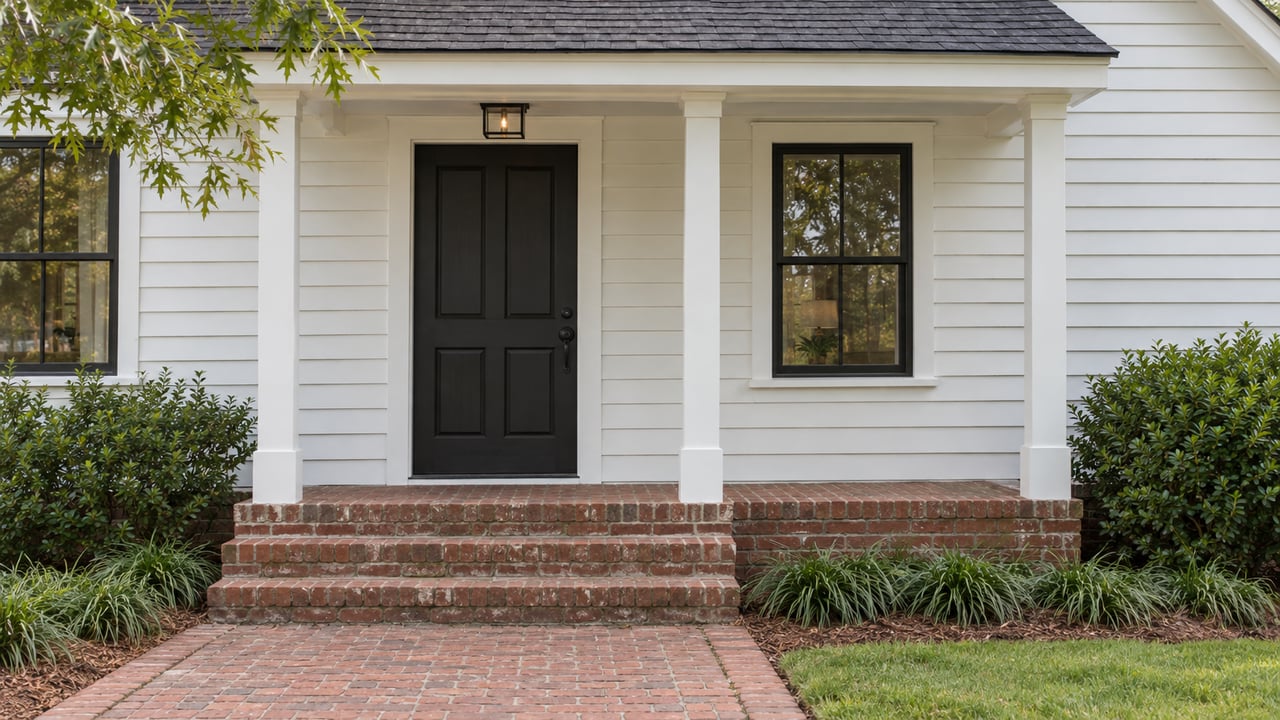
Picture two bungalows three blocks apart in Plaza Midwood. Both were built before 1940. Both have the deep front porches and gable rooflines that define the neighborhood. One owner decides to reroof with the same asphalt shingle, same color, nothing changed but the age of the material. The other owner does the identical project on the identical timeline. One of them needs a Certificate of Appropriateness from the Charlotte-Mecklenburg Historic Landmarks Commission before a single shingle comes off. The other doesn't need to ask anyone.
The difference isn't the house. It's a line drawn through the neighborhood in 1992, and it covers only about 14 percent of Plaza Midwood. Everything inside that boundary, roughly the area bordered by The Plaza, Central Avenue, Pecan Avenue and Mimosa Avenue, with pieces of Thomas Avenue and Clement folded in, falls under the Plaza Midwood Local Historic District. Everything outside it doesn't. A buyer comparing two listings a few streets apart can be comparing two completely different sets of rules for what happens after closing, and nothing on the MLS sheet tells you which set you're getting.
What the Line Actually Controls
North Carolina state law requires a Certificate of Appropriateness before any material alteration to a property inside a designated local historic district, and Plaza Midwood is one of eight such districts in Charlotte, alongside Dilworth, Fourth Ward, Wesley Heights and others. The Charlotte-Mecklenburg Historic Landmarks Commission reviews the request, and the city's own Certificate of Appropriateness page spells out that a COA has to be obtained before exterior work begins on a resource within the local district.
That review isn't reserved for additions or major renovations. Roof material and shingle color count as visible exterior changes, which means even a like-for-like replacement inside the boundary triggers the process. Repainting a house in its existing color scheme is generally exempt, but painting a surface that was never painted before is treated as a material alteration and needs sign-off, following the Secretary of the Interior's Standards for Rehabilitation that the commission applies to every project. Step outside the 14 percent, and none of this applies. Same neighborhood, same architecture, no review required.
What That Costs You in Time
This isn't just a paperwork detail you sort out eventually. Historic district review adds its own timeline on top of the standard permitting process, and that add-on typically runs another 30 to 60 days beyond the residential permit window. If you're closing on a Plaza Midwood bungalow planning to reroof before winter, or repaint before you list it again in a few years, that extra window is the difference between a project that finishes on schedule and one that stalls waiting on a commission meeting.
None of this means buying inside the Local Historic District is a mistake. The boundary exists because the buildings inside it, the Craftsman bungalows, Tudor Revivals and Colonial Revivals dating mostly from 1903 to 1940, are part of what makes the neighborhood the neighborhood. The point is narrower: know which side of the line your address sits on before you plan the renovation budget, not after the contractor tells you it needs a hearing.
The Line You Can't See From the Curb
The historic district boundary is at least a matter of public record. The second friction point in Plaza Midwood is harder to spot because it's underground.
A standard home inspection walks the roof, tests the panel, checks the crawlspace and verifies the major systems. It does not run a camera down the sewer lateral, the pipe that carries wastewater from the house to the city main. That line sits buried under the lawn, the driveway and the landscaping, invisible until it fails.
Plaza Midwood's soil and tree canopy make that a real consideration rather than a theoretical one. The neighborhood sits on the same red clay that runs through most of Mecklenburg County, soil that expands when wet and contracts when dry, putting steady pressure on anything buried in it. Layer on the mature oak canopy that gives Plaza Midwood its shade and its property values, and you get root systems that find their way into any crack in an aging clay or cast iron line. Older homes here, the same 1903 to 1940 stock that falls inside the historic boundary, are the homes most likely to still have that original plumbing in the ground.
Recent resale data for the broader Midwood area shows homes trading anywhere from the mid $300,000s to well over $2 million over the past year, with typical build years spanning 1920 all the way to new construction completed this year. The median build year lands around 2004, which sounds like a fairly modern housing stock until you realize that number is an average of a neighborhood where some houses are new and some are pushing 106 years old. The median build year tells you almost nothing about what's under any single lawn. A sewer camera inspection, run separately from the standard report, is the only way to know whether you're inheriting original clay pipe with root intrusion or a line that's already been replaced.
What Knob-and-Tube Does to Your Insurance Quote
The third friction point shows up on the insurance application, not the inspection report. Homes built in the early 20th century in neighborhoods like Plaza Midwood sometimes still carry knob-and-tube wiring, the original system that uses porcelain knobs to hold wiring away from the framing. It's legal to keep. No law requires its removal from an existing home.
The obstacle is that most insurers and mortgage lenders won't accept it. A buyer who finds knob-and-tube wiring during due diligence typically has three options: commit to full replacement within about 30 days, accept a stripped-down policy that covers less than a standard one, or pay a specialty insurer 50 to 100 percent more than the same house would cost to insure with modern wiring. Two of those three options either delay closing or raise the carrying cost of the house from day one.
The practical fix is sequencing. A licensed electrician's written report, done before you apply for insurance or approach a lender, tells you how much of the original system is still live versus how much was already replaced in a prior renovation. That report becomes the document your insurer asks for anyway, so getting it early protects the timeline instead of costing you a delay when the lender's own inspection flags it later.
Why the Median Price Won't Tell You Any of This
As of September 2026, the median home price for Plaza Midwood townhomes stood at $925,000, with townhomes averaging 38 days on market. That single number sits inside a resale range that has run from the mid $300,000s to well over $2 million over the past year. Neither figure tells you which of the three frictions above comes attached to a given address.
A $925,000 townhome inside the Local Historic District with original knob-and-tube and a clay sewer lateral is a different ownership experience than a $925,000 home two blocks outside the boundary with a rewired panel and a replaced sewer line, even if the listing photos look nearly identical. The boundary line, the pipe material, and the wiring era are the variables that actually determine your first two years of ownership costs and headaches. The price tag doesn't carry that information. Only the specific address does.
Before writing an offer on a pre-1960s Plaza Midwood property, it's worth checking the county's public parcel lookup at explore.charlottenc.gov to confirm historic district status, requesting a standalone sewer camera inspection alongside the standard report, and asking directly whether the wiring has been updated since the home was built. Each of those checks costs little and answers a question the median price can't.
A Few Common Questions
Does a National Register listing carry the same restrictions as the Local Historic District? No. National Register listing alone recognizes a property's historic significance and comes with material recommendations, but it doesn't require a Certificate of Appropriateness the way local historic district designation does. Only the local district designation triggers the COA requirement.
Is knob-and-tube wiring illegal to keep in an older home? No. It's generally legal to leave in place in an existing home. The practical barrier is that most insurers and mortgage lenders won't write a standard policy around it, which is what pushes owners toward replacement or a specialty carrier.
Can I find out before I tour a house whether it sits inside the Local Historic District? Yes. The boundary is public record and tied to specific parcels, so checking the county's parcel data ahead of a showing tells you which set of renovation rules, if any, applies to that address.
If you're weighing two Plaza Midwood addresses and want a clear read on which boundary lines, pipe ages, and wiring histories you'd actually be inheriting, The Sears Group can walk the specifics with you before you write an offer. Request a free valuation and consultation and bring the address, not just the listing price.